
May 7, 2026
It's not that there are many fun things, and gambling is one of them. Gambling IS fun. Those words are synonymous. Uncertainty means enjoyment, and the lack of uncertainty means no enjoyment :( .
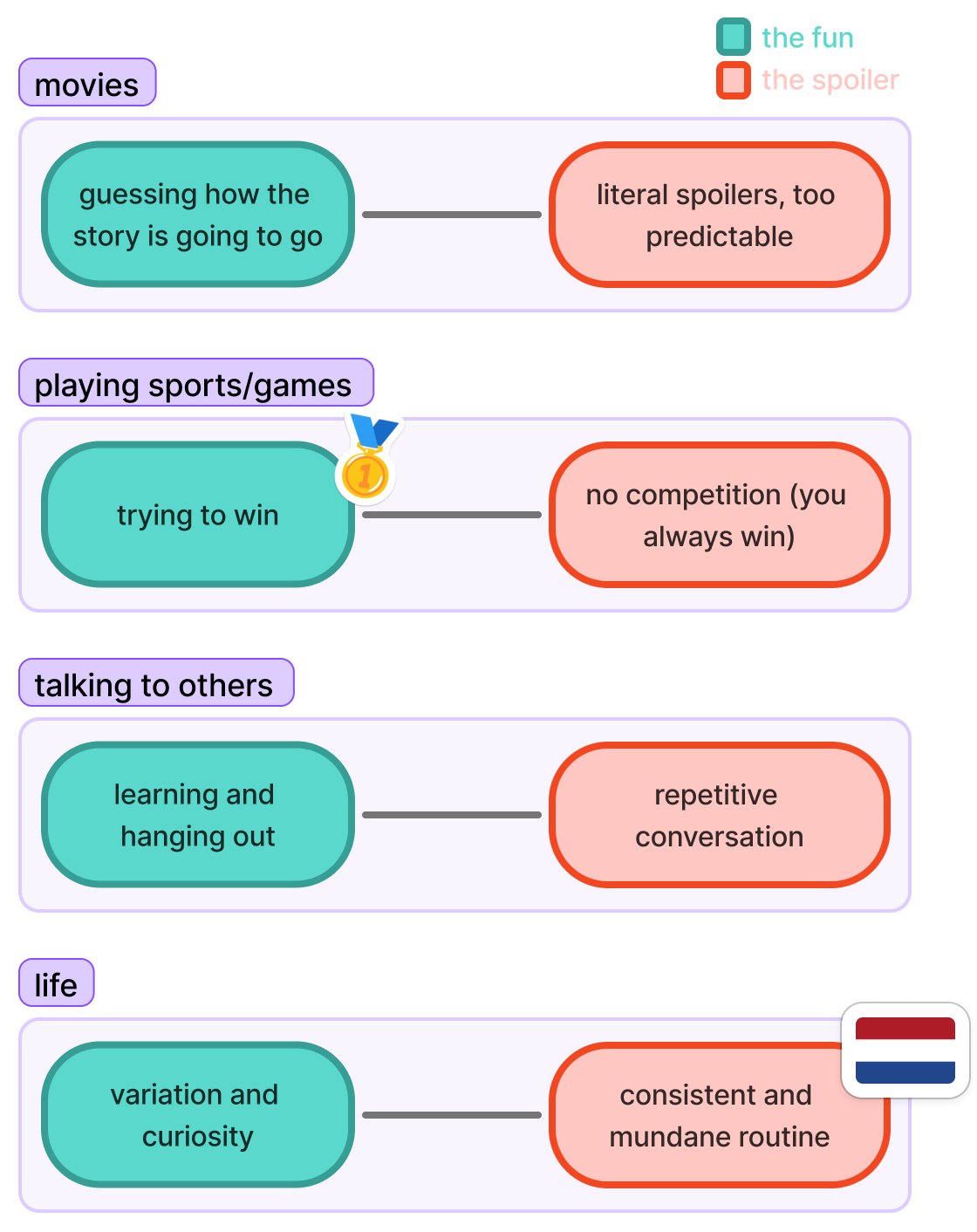
The Netherlands has a reputation for being boring. They have high taxes to maximize average quality of life and transportation is well-designed. In a twisted way, traffic helps you be happy because sometimes it's bad.
I connected the dots after I wrote my daily plans on paper; here is one of my after-work schedules (more notes in appendix):
5:05 - 5:30 commute home, clean up
5:34 - 5:37 check Discord, ask friends some questions, pack a clipboard for work
5:37 - 5:57 play reverc.org (site made by friend to play against bots that we programmed)
5:57 - 6:00 message friend about the site
6:05 - 6:30 ESP32
6:30 - 7:30 dinner
7:30 - 7:50 learn chinese
7:55 - 8:10 wrap up Isaac Sim vid/paper
8:15 - 9:00 robo arm tut
       9:00 bedtime routine
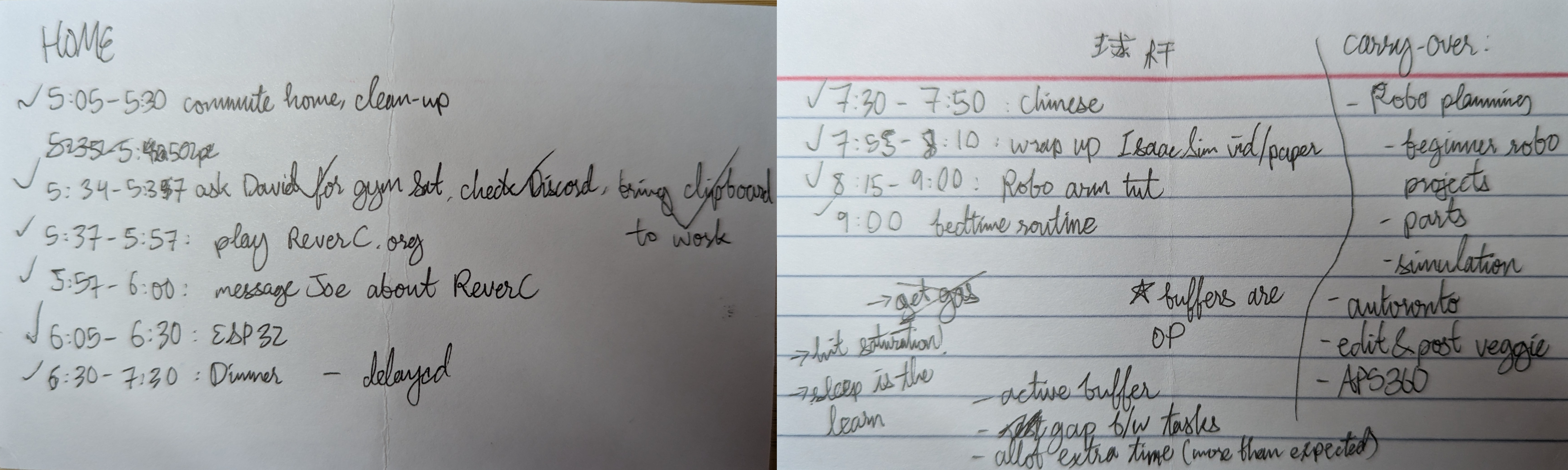
I have these index cards where I had my todo tasks, and I was crossing out those that I put on the schedule. That's even though I had not finished them yet - but as long as I trusted myself to execute, I could let my present worries go.
I pretty much sat bored at my desk instead of stressing about if I had time to do what I wanted later.
Boredom is good though. It's where you reflect. It's an absence of anxiety. It's when you accept that you have time to slow down.
On a small scale, creating procedures to resolve issues cancels bad (as well as good) emotions.
e.g. You drop your dinner - it happened, and once you accept that, there is no regret.
- get broom
- sweep up the dropped food
- throw it out
- make a decision
- refill your food (if any leftover)
- make more food
- stay hungry
Trust that you will adapt - you survived every situation so far, you will make it out
The first time I really crammed was after an ultimate tournament. I had a programming in C midterm, and was stressing for some reason - reminded myself that I survived all previous exams and even if it goes bad, I will live.

Cool we've cancelled all our emotions... so we can't be happy?
You're 40% at the 3 point line which is just a stat that doesn't invoke any emotion. Then you make a shot - this is just a data point in your average. You win a championship. Your protocol for scoring was shooting threes, and your team plan was rock solid.
And you look outward. That championship feels great.
You look closer. You hit a fist pump after you made the three.
That going in was not guaranteed, neither was the championship victory. You zoom out and suddenly a sure thing becomes a long shot.
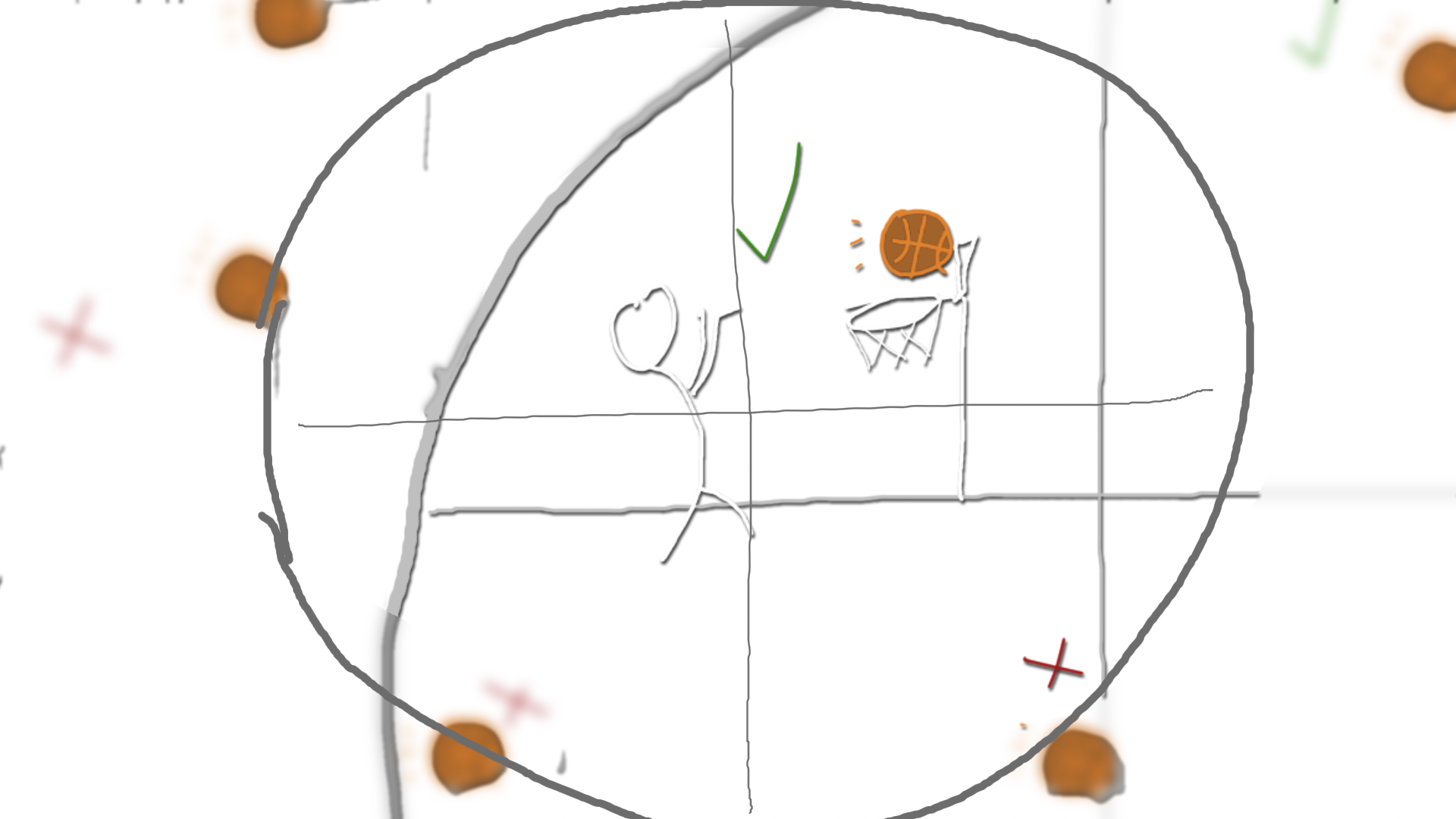
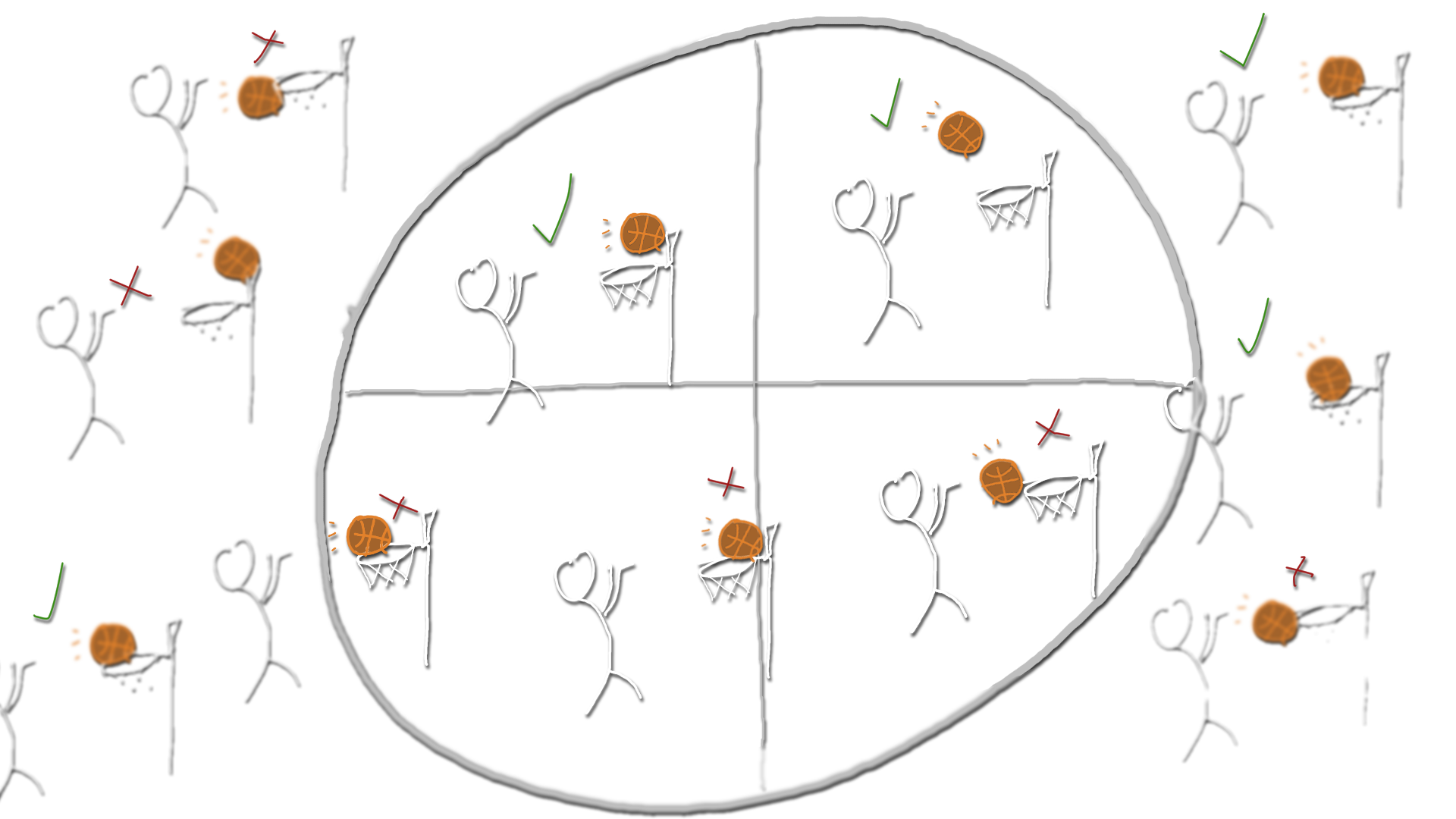
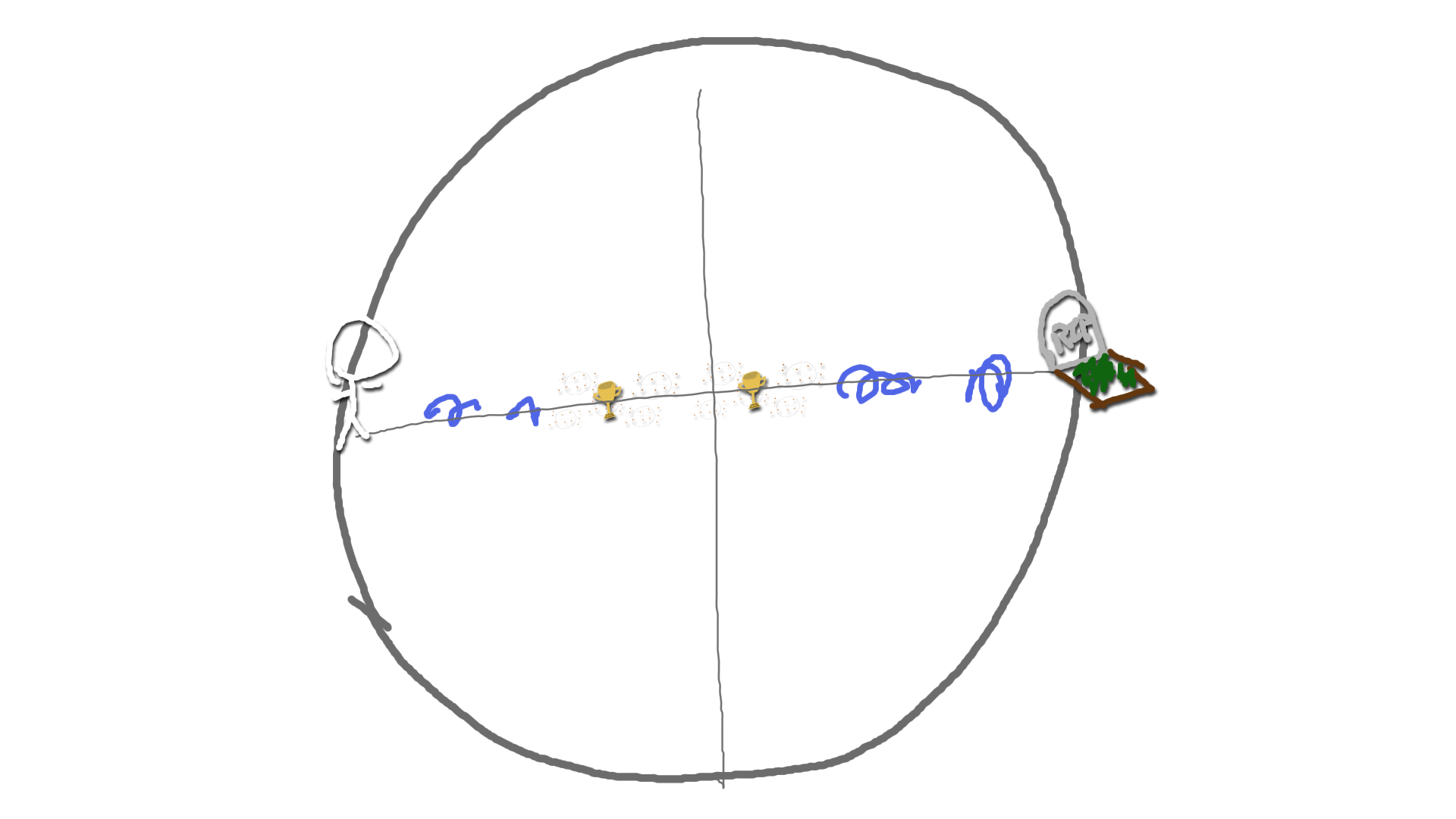
Just don't look at things too wide, or else all you'll see is death.
damn, life is all about perspective, isnt it? I actually can't be sure, but not knowing is fun :)
The wins stand on the shoulders of the boring moments. Gambling is fun and guarantees are boring, but gambling all the time pushes the odds against you. So plan what you can and guess on the rest.
Appendix
Feedback after creating some schedules
A schedule must have tolerance to account for:
- critical tasks taking longer than expected
- the urge to get something done rather than leaving it for next time
- unplanned interruptions
Otherwise, your schedule falls apart, changes too much, and has no benefit.
These help:
- Active buffer: ~20 minute buffer during any main session (e.g. afternoon at work, after work)
- Break time: unallocated time between each task
- Allot extra time: intentionally overestimate how much time a task takes
Other notes:
- zero-time actions DO NOT EXIST - properly allocate time slots for 'short activities' (even the 3 minutes was not enough) like checking emails and messages
- i feel like i hit saturation at the end of the day (feel like you used up most energy, big productivity drop-off after)
- sleep is where learning happens - believe that this is true to actualize gains made during the day
- create discipline knowing that not following the plan takes time from your other tasks
Why schedule
You act like a manager: higher level planning with focus on the big picture, where the implementation of individual tasks are abstracted away. When you just go with the flow, you play based on emotion and short-term gain, not an intentional strategy. In that case, your strategy is like:
After work, I'll get this stuff done. And if I don't, I sleep later until it's 2am and im still not done because my productivity has dropped and I got distracted.
You enter with the hope that you'll come out on top, even if the facts tell you the opposite. You're gambling your time, so most people keep doing it.